Pages

Showing posts with label coal. Show all posts

Wednesday, January 10, 2018

Appalachian Word of the Week -- SHAKER

You may call it something else, but in my house we called it the SHAKER.

What's a SHAKER? It's a piece of metal (usually iron) that came with whichever stove your family used to heat your house. We had one that fit the pot-bellied stove when we first moved to Loyall in 1957. In about 1962, Daddy bought a Stokermatic and got rid of the pot-bellied style. The Stoker, as we called it, had it own special SHAKER.

When you build a coal fire in a stove, you naturally have ashes as the coal burns. The ashes don't start out as ashes--they start out as chunks of glowing ash. You have to get rid of the burned up coal, so the fire can continue to burn and keep the area around the stove warm.

Notice I said the area around the stove. We had one stove in our house and believe me, the warmth did not spread out to fill the other rooms. The only fairly toasty spot was the sofa the was placed directly in front of the stove with a pathway of about five feet between them. We huddled on that sofa most of the winter.

Clothesline in the living room for winter
We also had a clothesline hung in that room. That's where we dried the laundry (worsh) in the winter. Or when it rained on washday (worshday) any time of the year.

When the ash gathered in the firebox, Mom got the SHAKER and opened the bottom door to the stove. She'd hook the SHAKER into a special slot and shake that SHAKER back and forth until ash came through the grate and landed in the bottom of the ash box. Her face turned red and she grunted like those wrestlers on the TV. When sparks started dropping, she knew it was time to stop.

I guess that's why they call it a grate. You grate the ash like you would grate cheese or nutmeg.

I think my mom enjoyed using that SHAKER. It was a way to work out all her frustrations. We all have to have some way to de-stress, I guess. Later in life, when she worked in Receiving at Belks, she would take all the burnt-out fluorescent bulbs to the burn box and throw them inside, smashing them to smithereens.

Diamonds in my coal bucket
After she used the SHAKER, she got her little shovel and shoveled the ashes into a coal bucket. I don't have ashes in my coal bucket. I have coal and diamonds in my coal bucket (wink). Then Mom took the bucket of steaming ash outside, down the steps, and into the driveway to dump them. Did I tell you my mom was a mere five-foot tall and petite? She was strong.

Those ashes helped to keep our gravel driveway from developing deep mudholes. It was a lot cheaper than buying gravel.

I loved watching her dump the ash when there was snow on the ground. They mixed with the cold snow and made steam rise up from the driveway.

Did you grow up with a coal stove? Who had to use the SHAKER in your house? Did you call it a SHAKER or something else?

I'd love to hear your stories.


Thursday, November 16, 2017

Appalachian Word of the Week -- THANKFUL


I decided to do something a bit different this week. Since Thanksgiving is coming soon, I chose THANKFUL for my Appalachian Word of the Week. Please join me as I remember. Perhaps you are THANKFUL for these, too. Or, you can add your THANKFUL memories to the Comments below.

I am THANKFUL that no matter how poor we were, we had a turkey on the table and plenty of food to eat as we celebrated Thanksgiving. I’m also THANKFUL for my family members who gathered with us—even those who were a bit challenging to get along with the rest of the year. On this day, we put it all aside to stuff ourselves with turkey, apple salad, stuffing, pea salad, and, if we were lucky, a dessert. My favorite dish, not because of flavor but because of uniqueness, was the bird’s nest. My mom filled a huge bowl with mashed potatoes, used a large spoon to make an indentation in the top, and filled it with peas. Hence, a bird’s nest.

Dad loved the turkey neck. We tried to leave the room when he got started on it. He’d sit there and eat the meat off the bones by sucking it off. Yuck. Disgusting. How I wish he was still here to suck on my turkey’s neck this year. I’d sit right there with him.

Having extended families with us made me even more THANKFUL. Granny, aunts and uncles, and cousins made the celebration even better. Laughter filled the house. Even the year Aunt Joyce helped clear the table and carried a pile of bowls to the soapy dishwater and dropped them in. Mom noticed chunks of food floating in the water and realized Aunt Joyce had dropped the apple salad leftovers into the water. Disaster! That was one of our favorites. I was not THANKFUL that I couldn’t have those leftovers. But, we laughed and gave her a hard time about it for years.

I am THANKFUL I grew up in a place where character and integrity were more valuable than money. No sense in putting on airs. You were either poor or poorer. What we were rich in was spirit, determination, strength, and faith in God. Doing good wasn’t expected, it was normal. Honesty came naturally. If you needed help, someone always rallied to your aid. And you returned the favor.

I am THANKFUL for the clear springs of water that worked their way through the limestone and bubbled to the surface for perfectly filtered water. Springs flowed into mountain streams that danced down the mountainside and into the creeks below. God spoke to me through those streams of pure water. I could almost hear his words speak to me as the water crashed over rocks and fallen trees and rushed past me, inviting me to rush along with him. I still find refuge in the presence of a fast mountain stream.

Dad, Mom, and my son
and the porch swing
I am THANKFUL for my porch swing, where I could while away the hours each day by reading or writing poems. My mountain feist dog swung with me as I dreamed of a future of experiencing the world beyond the mountains or crying to the one creature (my dog) who understood my disappointments, fears, and failures.

That swing served as my therapist in hard times and my motivator to kick-start my creative juices when life looked promising. Everyone should have a porch swing (and a dog) to be THANKFUL for.


Coal kept us warm
I’m THANKFUL for coal. It provided heat, even if we only had a pot-bellied stove or later a Stokermatic stove that monitored the temperature and kept it safe. Coal also provided for our cooking when I was younger as Granny or Mom cooked on a coal cook stove. Coal also provided a livelihood for my brother and hundreds of other Appalachian families in my county. If not for coal, many would not have survived until Thanksgiving.

Loyall High School
I’m THANKFUL for my school where I had fabulous teachers who opened my world beyond the mountains that surrounded me, teaching me literature, social skills, and thinking skills to expand my options beyond my naïve worldview. They prepared me to step beyond those mountains with confidence to go wherever God led me.


The garden
I’m THANKFUL for the garden on the mountain behind our house that provided food year-round as Mom and Dad canned extras for the winter. That garden taught me that hard work reaps benefits past the here and now. It also showed me God’s bounty provides for needs if you put forth the effort to nurture it.

Loyall Church of Christ
I'm THANKFUL for my tiny church where I learned the meaning of unconditional love. My church family served as examples of true love and guided me along my path to maturity. The most important day of my life took place among those friends when I accepted Christ as my savior and was baptized as they sang and prayed for me.


3rd grade class at Loyall
Most of all, I’m THANKFUL for all the friends who blessed me as a child and who have continued to be dear friends into my long-past-childhood stage in life. Many things have changed for us all. Some are delightful changes (like grandchildren), some heartbreaking. But the constant in our lives is the heritage we shared in Appalachia. We are all blessed.


What are you THANKFUL for this Thanksgiving season? I’d love to hear your stories.

Happy Thanksgiving!


Wednesday, December 21, 2016

Appalachian Word of the Week -- SNOWCREAM

My childhood front yard

The appropriate word for the week, considering this is the first day of Winter, is one of my favorites -- SNOWCREAM!


As a youngster in the mountains of Harlan County, KY, I lived for the days when a massive snow covered the landscape. Not only did I enjoy playing in the snow, sliding down the mountainside in a saucer sled, and building a snow fort with my brother, but I loved making SNOWCREAM.


Of course, the process of making SNOWCREAM required us to collect fresh, clean (emphasis on clean) snow before anyone got outside and dirtied it up.


We gathered up all the largest pots and bowls from the kitchen and headed outside.


Now, there is a process to gathering snow. Since almost everybody around us heated their houses with coal, we had to first rake off the top layer of snow to remove the black spots of ash that had dropped onto the top layer. That completed, we began scooping snow into our bowls and pots.


Of course, we made sure not to scoop too close to the ground. Lots of dogs and wild animals used the ground for a litter box, so we made sure to avoid any yellow or brown snow. We also didn't want to get grass trimmings in our snow.


After gathering up all of our bowls and pots, we carried it inside to Mom, who was waiting with the bag of sugar, can of cream, vanilla flavoring and the salt box. She also had the hand mixer ready to get the job done faster.


She took the largest bowl and checked to make sure it was clean snow. Then she added about a cup of sugar and started mixing. Then she added pure cream out of the can. Some people make it with milk, but the flavor is nowhere near as good. Then she added vanilla flavoring and a pinch of salt. As the snow melted down, she scooped in more snow and the process continued until every bowl and pot of snow had been added to the mixture. She continued to add sugar and cream until the concoction was perfect and creamy.


She scooped out a bowl of snowcream for each of us and then put the main bowl into smaller bowls that would fit into the freezer for later.


Oh, what JOY to sit in front of the coal stove and eat that snowcream! Our fingers were numb and so were our lips, but we didn't care. It was glorious.


As we made our way through the main bowls of snowcream stored in the freezer, we sometimes added a bit of flavor to the mix. A favorite was Nehi Grape pop. We also tried peach pop, strawberry pop, or chocolate pop. If you don't know what pop is, you may call it soda or soft drink. Back in my day, we had some wonderful flavors available.


So, if you are fortunate enough to get a big snow where you live, why not give it a try and make some SNOWCREAM for yourself? Just make sure you watch out for yellow or brown snow.


Exact recipes don't work for our snowcream. You have to go by taste. If the mix is too sweet, add some snow. If it's not sweet enough, add more sugar. If it's not creamy enough, add more cream. You get the picture.


Have you ever eaten SNOWCREAM? Tell me about your experience.

Wednesday, December 7, 2016

Appalachian Word of the Week -- MESS

My Appalachian word this week is MESS.

Although there are several uses of the word “mess” in Appalachia, and I have been told many times that I am one of those types of mess


and have been responsible for leaving another type of mess, 


the one I am concentrating on this week refers to a MESS of food.

A MESS is the amount of a food item you gather for a meal. The size of a MESS varies, according to the number of people who will be eating the meal. That means a MESS for just me is much smaller than a group of six people. A group of twelve or more would require an even larger MESS.

Although a MESS can refer to a variety of food items, in my family it generally referred to green beans, Swiss chard, tomatoes, green onions, or any other food we grew in our garden. It also referred to wild blackberries or other berries.

However, in my household, we also gathered a MESS of uncultivated greens from our yard.

Last week I told you about poke, but there are several other greens available. Greens that aren't as potentially toxic.

Poke


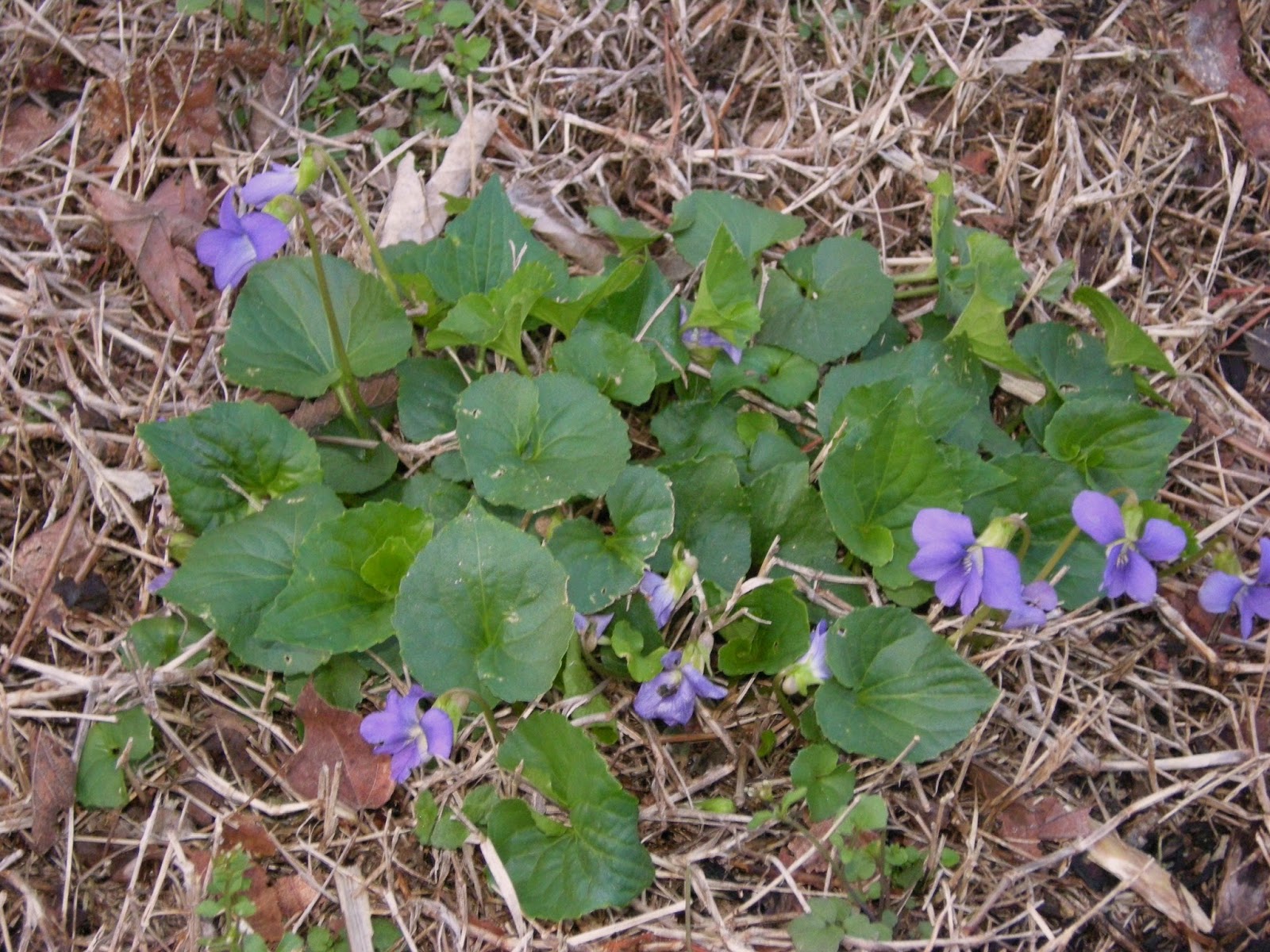
My mother regularly sent me out into the yard to collect plantin’, dandelions, and violets to cook up a good MESS of greens for dinner.


Plantin'


Wild Violets

Dandelions

She cleaned them up (you never knew which critter had stopped for a visit), trimmed them, and threw them into a pot of boiling salted water to cook. In an area where fresh vegetables were usually limited to what you had on hand, the variety of wild greens was a healthy change to the regular menu and extended the supply of canned vegetables from the previous year.


Have you ever eaten the weeds from your yard? If so, what did you serve up?


Wednesday, November 23, 2016

Appalachian Word of the Week - Conveyors

This week's word is CONVEYORS. The conveyor is how miners got coal from an underground mine to the coal tipple (that we talked about last week). I've seen conveyors that stretched from the entrance to the mine all the way down the side of the mountain to the tipple. I've even seen one near Pineville, KY that crossed the main road.

Crummies, KY conveyor stretching down the mountain to the tipple


Although trucks can also be used to transport the coal, I remember how fascinated I was watching the coal travel along the conveyor and drop into the bin of the tipple, to then be released into a train car. Most conveyors are enclosed, though, so the coal doesn't slip off.

Benito Mine, Benito, KY


You may wonder how the coal gets to the conveyor from where it’s mined.


A couple of years ago, I had the opportunity of visiting a coal mine and seeing for myself how coal is, or was, mined. That mine is no longer in operation.


As I did some research for a novel set in the Appalachian coal fields, I took a tour of Portal 31 in Lynch, Kentucky in Harlan County. I climbed into a people mover as it drove us into the mine and down further and further. Not a great experience for anyone who is claustrophobic. 

People mover that takes miners (visitors) deep into the mine

My tour guide who I discovered was a former classmate. We've both changed a lot in 40 years.

One of the vignettes with a mule. That ceiling didn't make me feel safe.

A map of all the tunnels through the mountain. 

Some equipment needed in the mines


Along the way, we stopped at vignettes of life in a coal mine from the early days of mining there. The days when they had mules to pull the coal out of the mine. We also saw the early methods of getting the coal out of the mountain using dynamite and pick axes. Those were the days when fancy gadgets didn’t help shore up the roof to keep it from collapsing on them and they had no modern devices to alert them to gas. It was especially dangerous since they used caps with carbide lamps to light the way. Those flames could be fatal if gas was present.

Miner from Lejunior Mine

I remember my dad used a carbide miners cap to go frog gigging at night. I miss those days of fresh bullfrog legs for dinner.

When the coal was extracted from the mountain, it was then transported by cart (motorized in modern days, mule-powered in the older days) through the tunnels and outside the mine to the CONVEYER.

The CONVEYER was started up, the coal was loaded onto it, and it carried the blocks up or down the mountain to the tipple.

I won’t get political about it, but mining today has changed from just the deep mine method. There is also strip mining for seams of coal near the surface. However, the one that breaks my heart, since I'm a girl from the mountains, is mountaintop removal. It’s sad to see the tops of my beautiful mountains and the forests that once covered them completely wiped out to reach the coal. Yes, they are forced to replant when they are finished removing all the coal available, but I can’t help but think it is very much like what happens with a mastectomy. The coal is gone, but so is much of the tissue. All that’s left are the scars and the memories.


Coal mining seems to be disappearing from the mountains, though. Men and women have lost their jobs and have few to no opportunities to provide for their families. The economic and social make-up of the area is deteriorating.


It breaks my heart. But, true mountain people always find a way to survive. Above the fog, the sun still shines. Beneath the mist, the mountains still stand—even if they are a tad damaged in spots. There’s always hope for tomorrow.

Photo by Author Sandra Aldrich

Tuesday, November 15, 2016

COAL TIPPLE

This week’s Appalachian word is COAL TIPPLE.

Crummies Creek Coal Tipple


Some of you may never have heard of a coal tipple, so I’ll try to explain it to you.

Wikipedia defines a tipple as a structure used at a mine to load the extracted product (e.g., coal, ores) for transport, typically into railroad hopper cars. In the United States, tipples have been frequently associated with coal mines, but they have also been used for hard rock mining.

Courtesy of Wikipedia

 If you’ve ever driven through coal country, you’ve probably seen a tipple and didn’t know what it was used for. I’ll let Wikipedia help in the explaining again.

Basic coal tipples simply loaded coal into railroad cars.[1] Many tipples had simple screening equipment to sort coal pieces by size before loading.[2][3]:20 Today, a coal mine facility usually includes a coal preparation plant which washes coal of soil and rock, before loading it for transport to market. The term "tipple" may be used interchangeably with coal prep plant.


I remember seeing lots of coal tipples in Harlan County. My granny lived across the road from one in Crummies, KY. I sat rocking on the front porch of her house, watching as the train cars slowly rolled under the tipple. They opened the hatch on the tipple and coal filled the train cars as they continued to roll underneath.  


 Because they kept moving underneath, the coal filled the cars a mound at a time. I often thought it interesting that the result was a mountain range of peaks and hollers, just like the mountains around me.

Tipples don’t only fill up train cars. They also fill up pick-up trucks (really big pick-up trucks) so coal can be delivered locally to vendors who sell coal to local businesses and residents.


Also, coal doesn’t come in just one size lump. Different sizes are needed for different uses. Big blocks are used mostly commercially—like in plants. When I was a little girl, we had a pot-bellied stove for heating the house. We used smaller chunks of coal for that so the fire wouldn’t burn too hot and burn the house down. I do remember, however, a couple of times when the fire got so hot that the stovepipe between the stove and the fireplace flue glowed bright red. Those were the nights my mom stayed up all night to watch after the fire.


Later, when we bought a Stokermatic stove, smaller pieces of coal were required. They had to be small enough to fit through an auger that took coal from the built-in coal bin and into the firebox. These stoves had a thermostat and monitored the heat produced by the stove. Much safer. They also didn’t burn you if you accidentally touched them. And they had a fan inside to blow the warmed air so it traveled further into the house.


Imagine today on a cold winter day and you only had one vent from your furnace. One vent in the living room. All the other rooms in the house had to depend on that one vent to receive any warmth at all. I love progress!

If you ever wondered how the coal got to the tipple, stay tuned for next week’s word. If you don’t want to miss it, then sign up with your email address on the right side of this post and I’ll send you a link each week to the new posts.

Do you have any stories about coal tipples? How about scary nights with your coal-powered stoves? Leave a comment below and share.